
7 Signs a Tree on Your Property May Be Dangerous: Warning Signs Homeowners Should Never Ignore

Trees provide shade, beauty, and environmental benefits for homeowners. However, when a tree becomes damaged, diseased, or structurally unstable, it can quickly turn into a serious safety hazard.
Recognizing the signs that a tree on your property may be dangerous can help prevent property damage, costly repairs, and personal injuries.
For homeowners in areas with frequent storms, including parts of the Midwest and northern climates, monitoring tree health is especially important. Trees weakened by wind, disease, or root damage may fail unexpectedly during severe weather.
Below are seven common warning signs that a tree may need professional inspection or removal.

1. The Tree Is Leaning
A tree that suddenly begins to lean may indicate root damage or structural instability.
While some trees naturally grow at a slight angle, a new or worsening lean can signal that the root system is failing.
Warning signs associated with leaning trees include:
Exposed or lifted roots
Cracks in the soil around the base
Recent storm damage
Sudden changes in tree position
If a tree leans toward your house, driveway, or other structures, it should be evaluated immediately.

2. Large Dead Branches
Dead or dying branches are a major safety concern.
These branches, often called widowmakers, can fall without warning—especially during storms or strong winds.
Signs of dead branches include:
No leaves during the growing season
Brittle wood
Peeling bark
Branches that appear dry or gray
Large dead limbs overhanging roofs, sidewalks, or vehicles pose an increased risk.

3. Cracks in the Trunk
Deep cracks in the trunk can weaken the structural integrity of a tree.
Cracks may occur due to:
Severe weather
Rapid growth
Internal decay
Lightning strikes
Long vertical cracks are particularly concerning because they may indicate that the trunk is splitting under pressure.
If large cracks appear suddenly, the tree may require professional assessment.

4. Fungus Growing on the Tree
The presence of mushrooms or fungal growth around a tree’s base can be a sign of internal decay.
Fungi often grow when the interior wood of a tree is rotting.
Common warning signs include:
Mushrooms at the base of the trunk
Shelf fungi growing on bark
Soft or crumbly wood near the roots
According to the International Society of Arboriculture, fungal growth can indicate that the tree’s internal structure is deteriorating.

5. Hollow or Rotting Areas
Large hollow sections or visible rot weaken a tree’s internal structure.
While some older trees can survive with minor hollow areas, extensive cavities can increase the risk of collapse.
Signs of internal rot include:
Soft or spongy wood
Large openings in the trunk
Areas where bark has fallen away
Carpenter ants or other insects inside the trunk
If more than 30% of the trunk appears hollow, the tree may be structurally compromised.

6. Root Damage
Healthy roots anchor a tree securely in the ground. When roots are damaged, the entire tree can become unstable.
Root damage may occur due to:
Construction near the tree
Soil erosion
Heavy equipment
Poor drainage
Severe storms
Exposed roots, cracked soil around the base, or lifted ground may indicate root system failure.
Trees with compromised roots are much more likely to fall during strong winds.
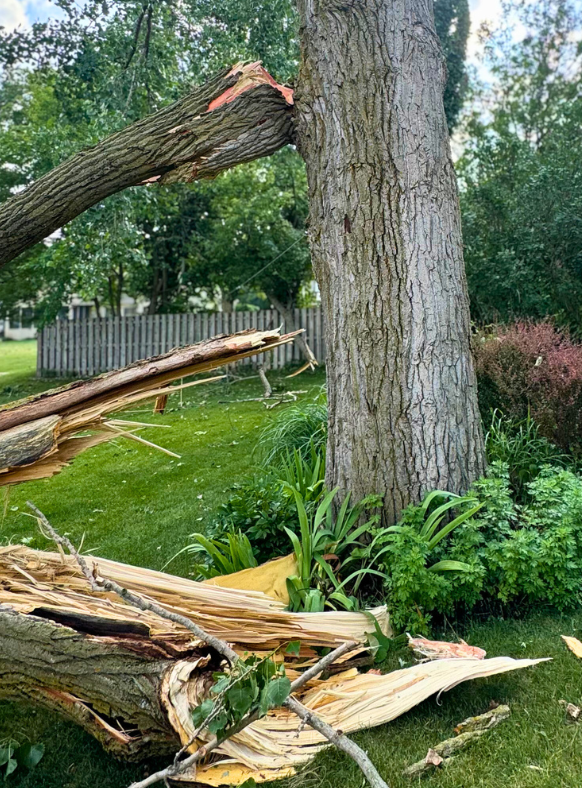
7. Storm Damage
Storms can cause serious structural damage to trees.
After severe weather, inspect trees for:
Broken branches
Split trunks
Missing limbs
Leaning or uprooting
Even if the tree remains standing, storm damage can weaken its structure and increase the risk of failure later.
Organizations like the National Weather Service note that high winds are one of the leading causes of tree failures during storms.

When to Call a Professional Tree Service
If you notice any of these warning signs, it’s best to have the tree inspected by a professional.
Tree care specialists can evaluate:
Structural stability
Root health
Disease or decay
Risk of failure
Professional crews have the training and equipment needed to safely prune, stabilize, or remove hazardous trees when necessary.
Early evaluation can prevent dangerous situations and protect nearby structures.
FAQs
How do I know if a tree is dangerous?
Leaning trunks, large dead branches, cracks in the trunk, and signs of decay are common indicators that a tree may be hazardous.
Can a leaning tree fall suddenly?
Yes. Leaning trees often have weakened root systems and may fall unexpectedly, especially during storms or strong winds.
Should I remove a tree near my house?
Trees close to homes should be inspected regularly. If the tree shows signs of structural damage or instability, removal may be recommended.
Are dead branches dangerous?
Yes. Dead limbs can fall without warning and may cause injury or property damage.
When should a tree be removed?
A tree should be removed when it poses a safety risk, shows severe structural damage, or has extensive disease or decay.
Can a damaged tree be saved?
In some cases, pruning or stabilization can improve a tree’s safety. However, severely damaged or decaying trees may require removal.

Conclusion
Recognizing the signs a tree on your property may be dangerous is an important step in protecting your home and family.
Leaning trees, dead branches, fungal growth, and storm damage are all warning signals that should not be ignored.
If you notice any of these issues, contacting a professional tree service can help determine the safest solution and prevent costly damage in the future.
Give us a call at (517) 604-9795 or shoot us a message.


Comments